
SEND & The Brookland SEND Offer
At Brookland Junior School, we believe that every child should have the best possible learning opportunities, and we place inclusion at the heart of our school curriculum and culture.
We take specific action to adapt, support and encourage our SEND children within a caring environment, proactively identifying and removing barriers to learning.
We enable all our children to participate fully in learning activities and experiences by providing an accessible curriculum and environment that responds and is adapted to the individual academic and personal development of each child.
We work collaboratively with parents/carers and outside agencies to ensure that every child is supported, challenged and encouraged to achieve, thrive and 'be the best they can be'.
The Brookland SEND Offer
Welcome to our Brookland SEND Offer. This digital guide is designed for both our school staff and families. It outlines the specific areas of Special Educational Needs (SEN) present within our school community and provides actionable, evidence-based strategies to support our learners both inside and outside the classroom.
Our 3-Tiered Approach to Provision
To ensure every child receives the right support at the right time, our strategies and provisions are structured into three distinct tiers:
- Tier 1: Ordinarily Available Provision
Universal, high-quality teaching strategies that are consistently available to all children in every classroom. - Tier 2: Targeted Interventions
Short-term, focused support that is "additional to and different from" our standard universal offering. - Tier 3: Specific Individual Interventions
Highly personalised, bespoke support tailored explicitly to a child’s unique, high-level needs.
Our guide includes direct links to proven strategies for each SEN area, along with tools, templates, and ready-to-use classroom/home strategies.
For school staff, it features recommended CPD modules and training links, while families can access a directory of external services, local offers, and support groups.
ADHD
Presentation
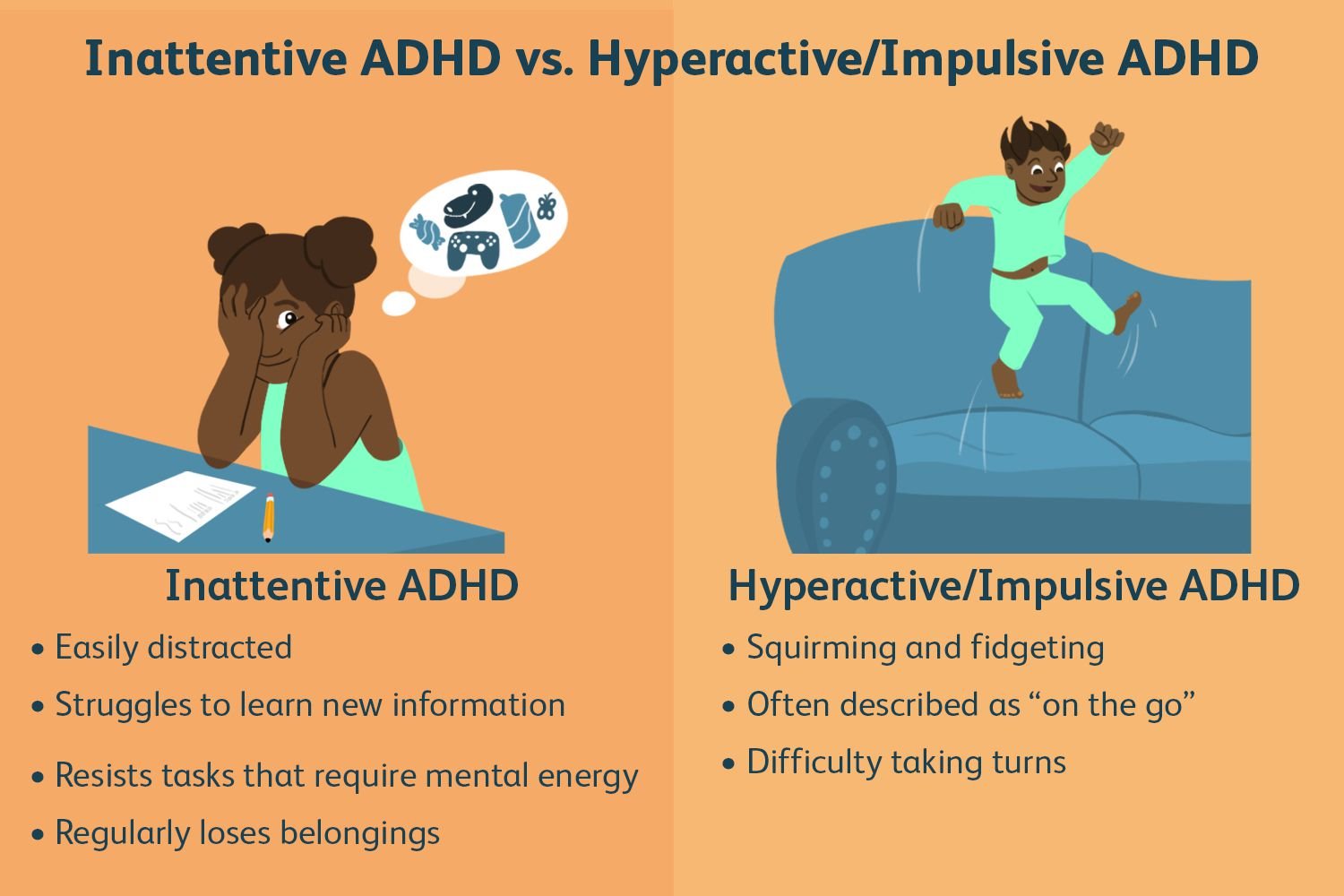
ADHD pupils are often creative problem-solvers who bring unique perspectives and deep focus to their special interests. However, they struggle with executive functioning and self-regulation, which can make starting tasks feel overwhelming and disorganising. Their energy levels may shift quickly between hyperactive fidgeting and zoning out. At Brookland we recognise that a pupil's impulsive, intense emotional reactions should not be treated as bad behaviour, rather a need which needs inclusive strategies and adaptations. To succeed, they need structured support to help them organise their thoughts, manage group work, and channel their energy productively.
Tier 1: Ordinary and Available Provision
Environment & Routine
- Calm spaces: Low-arousal, decluttered rooms.
- Structure: Predictable routines, visual timetables, and timers.
- Break times: Structured lunchtime provision, lunchtime clubs and sports clubs.
- Timers: to encourage task completion and focus
Communication & Teaching
- Clarity: Simple, direct instructions and visual aids.
- Tone: Calm delivery, positive language, and frequent praise.
- Support: Scaffolding tasks to avoid cognitive overload.
- Peer support: Having peers repeat instructions back to each other.
Regulation
- Tools: Zones of Regulation (see wellbeing page), scaling the "Size of the Problem."
- Fidget/Sensory tools: an agreed sensory tool to aid focus
- Resistance bands: to
- Breaks: Scheduled movement breaks and free play.
- Staff support: Consistent boundaries, 1:1 time, and adult check-ins.
- Motivation: Structured reward systems.
Tier 2: Targeted Interventions
Task Engagement & Learning
- Pre-teach interventions: Previewing learning before the lesson.
- In-task checklist: Visual checklists to track step-by-step progress.
- Now/Next boards: Simple, immediate transition cues.
Sensory & Regulation
- Sensory circuits (2 x per day am and pm): Guided physical exercises to alertness or calm.
- Sensory break cards to use in lessons
- Social Skills Groups: working with peers and an adult to develop social interactions
- Lego therapy: a specific social and communication intervention
- Personalised Zones of Regulation chart: Individualised tool for emotional check-ins.
- Praise books: wellbeing check in record to highlight successes and achievement
- Low arousal room/sensory room
- Mentoring with a trusted adult
Tier 3: Specific Individual Interventions
-
Counselling and mentoring: arranged with our wellbeing lead and SENCO
-
Personalised timetable: an agreed adapted timetable with possible sensory adaptations
-
Personalised behaviour plans: identified rewards and targets shared with staff
Practical Tools and Resources
-
In task checklist
-
Fidget/sensory tools
-
Resistance bands
-
Resources for sensory circuits
-
Timers
-
Now and next boards

Signposting and Support for parents:
Autism
Presentation
At Brookland Junior, we are committed to helping our autistic pupils thrive by supporting their unique communication, sensory, and learning needs. Key Stage 2 introduces bigger classroom demands, so we use clear language, visual timetables, and structured routines to reduce anxiety and prevent cognitive overload. We understand that behaviours like stimming, movement, or task refusal are often expressions of sensory overwhelm or stress. By working closely with families, we provide a safe, predictable environment where every child feels understood, organised, and ready to learn.
Tier 1: Ordinarily Available Provision
- Environmental Adjustments: Quiet spaces, low-arousal areas, visual timetables, consistent timetables, and considered use of display/resource colours.
- Adaptive Teaching: Scaffolded tasks, modelling, adaptive teaching methods, and technology like laptops, iPads, audiobooks, and Widgit symbols.
- Whole-Class Regulation: Zones of Regulation, Mindfulness, 5-Point Scale ("Size of the Problem"), and teaching pupils to identify when they need a break.
- Social & Community: Supportive peers, school clubs, classroom jobs, and general responsibilities.
- Routine Motivation: Standard reward charts, stickers, in-task checklists, visual timers, and sand timers.
Tier 2: Targeted Interventions
- Social & Emotional Interventions: Lego Therapy, social skills groups, social stories and lunchtime clubs.
- Academic interventions: Focused pre-teaching of vocabulary or concepts before lessons.
- Sensory & Physical Support: Planned sensory breaks, structured sensory circuits, and targeted sensory tools (e.g., ear defenders, wobble cushions).
- Communication & Predictability: Individual "Now and Next" boards, in class checklist
- Home-School Links: Regular parental communication and regular check-ins with a designated key adult.
Specific Individual Interventions
- Specialist Therapy: 1-to-1 counselling, play therapy, and Occupational Therapy (OT) advised tools.
- Allocated TA support: 1-to-1 staff support (in class or on playground)and access to a specialist sensory room.
- Technology: Access as needed to laptops, iPads and specialist hardware such as C-Pens (scanning pens) to support learning.
- Personalised Rewards and praise: Individualised proud books, bespoke daily reward charts, and formal home-school communication books.
Practical Tools and Resources
- sensory tools
- Now and next boards
- in-class checklist
- visual timetables
- Zones of Regulation chart
- sensory room
- low arousal room
- access to technology
- reward/praise charts
- resistance bands
- Widgit - symbols based online program
- Social stories
Signposting and Support for parents
-
https://www.autism.org.uk/what-we-do/welsh-peer-support-groups/toolkit
-
https://www.england.nhs.uk/learning-disabilities/about/useful-autism-resources-and-training/
-
https://www.autismeducationtrust.org.uk/resources/aet-schools-standards-framework
-
https://www.ambitiousaboutautism.org.uk/what-we-do/services/i-am-a-parent-carer/parent-toolkit
Fine Motor Skills
Presentation
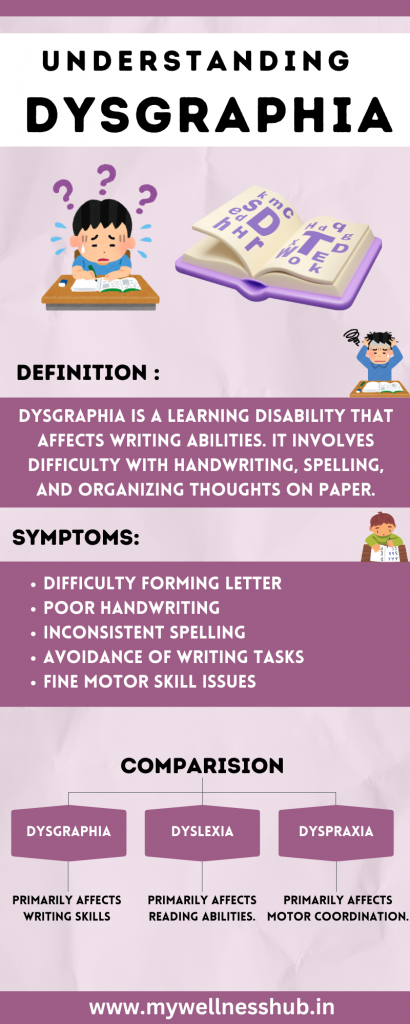
As children transition into Key Stage 2, the physical demands of the curriculum increase significantly. Developing the finger strength, dexterity, and hand-eye coordination required for daily tasks can be challenging. Signs may include awkward pencil grip, poor handwriting control, or difficulty using classroom tools like scissors. As writing or cutting can cause physical fatigue and discomfort, these capable children may become anxious, frustrated, or actively avoid subjects like art and literacy. Learners facing these challenges are often highly creative, intelligent, and articulate, possessing brilliant ideas and excellent verbal skills that far exceed what they can comfortably produce on paper.
Tier 1: Ordinary and Available Provision
- Pencil grips: Providing ergonomic or chunky triangular grips on all writing tools.
- Writing slopes: Using angled desks or binders to support wrist extension.
- Reducing copying from the board: Providing desktop printouts or pre-filled cloze procedures.
- Regular movement breaks: Whole-class physical resets to combat physical fatigue.
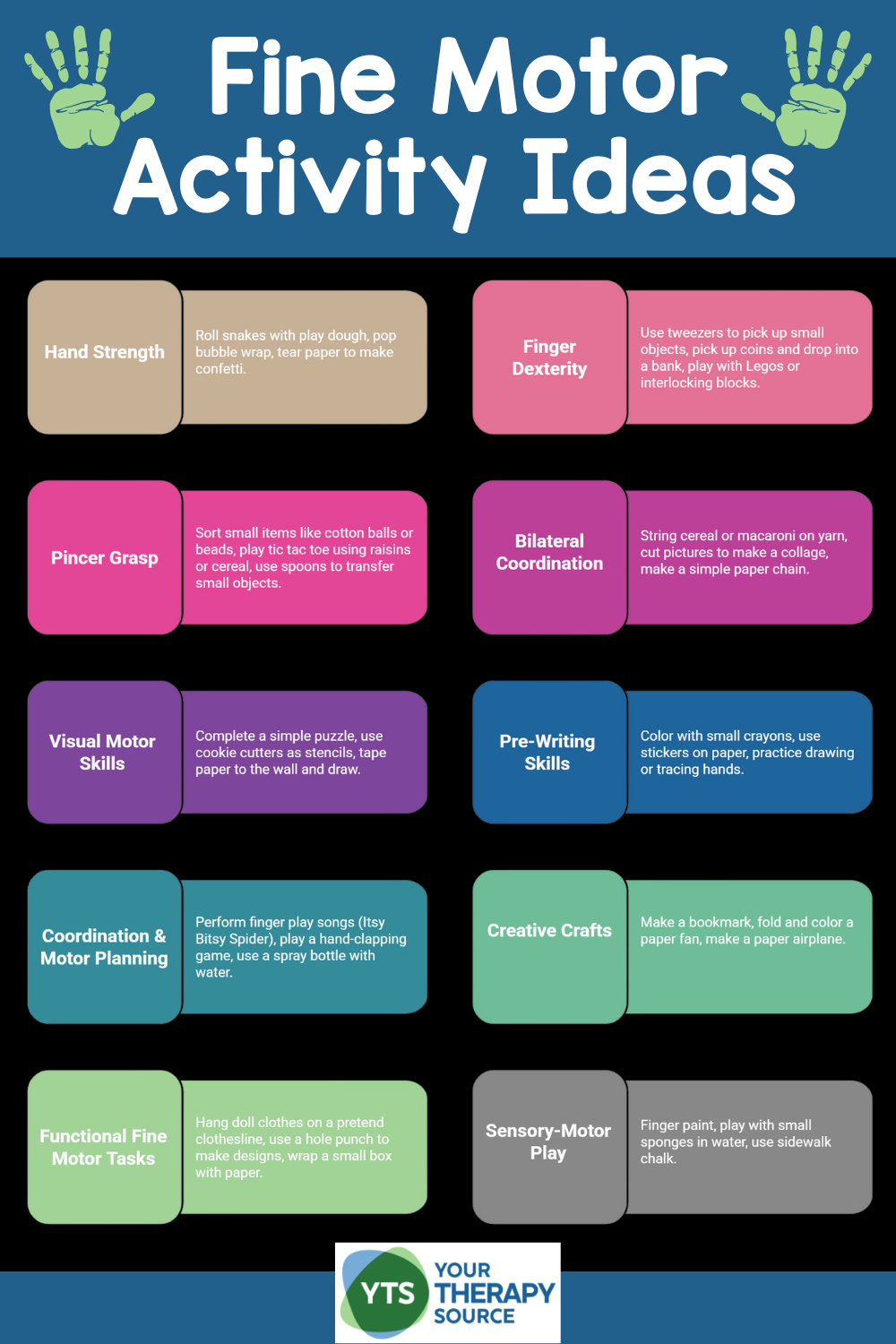
- Putty, playdough, and threading: Soft continuous motor practice available at continuous provision or registration.
- Smaller boards and writing frames: Limiting the required spatial layout to reduce cognitive and physical overwhelm.
- Visual checklists and templates: Clear, broken-down steps for writing tasks.
- Alternative recording options: Allowing verbal answers, typing, or dictation for specific tasks.
Tier 2: Targeted Interventions
- Fine motor skills group: Focused sessions focusing on finger isolated movements and grip.
- Handwriting practice: Structured, short bursts of explicit letter-formation teaching (Debbie Hepplewhite scheme - see below for workbooks).
- Hand strengthening exercises: Targeted resistance work using therapeutic putty, elastic bands, and pegboards.
- Pre-teaching Art and DT skills: Small group practice with scissors, glue sticks, or tools the day before a main lesson.
- Lego Therapy: Structured group play to build precise finger strength, coordination, and communication skills.
- Sensory circuits: to alert and calm the body before learning.
- Barnet Toolkit resources: guidance from regional toolkit (see link below).
Tier 3: Specific Individual Interventions
- Individual occupational therapy (OT): Executing precise exercises prescribed directly by an OT. Depending on availability from Barnet Local Authority.
- Technology : laptop, speech-to-text software.
- Scribing: Having an adult write down the student’s responses in exams.
Practical Tools and Resources
- peg boards and pegs
- tweezers
- theraputty
- pencil grips
- handwriting slopes
- threading
Signposting and Support for parents
-
Dyspraxia Foundation – https://dyspraxiafoundation.org.uk/ •
-
The Sensory Projects – https://thesensoryprojects.co.uk/ •
-
Royal College of Occupational Therapists – https://www.rcot.co.uk/ •
-
Youth Sport Trust – https://www.youthsporttrust.org/
-
https://www.barnetlocaloffer.org.uk/senco_zone/documents/2106-
 motor-skills-toolkit
Gross Motor Skills
Presentation
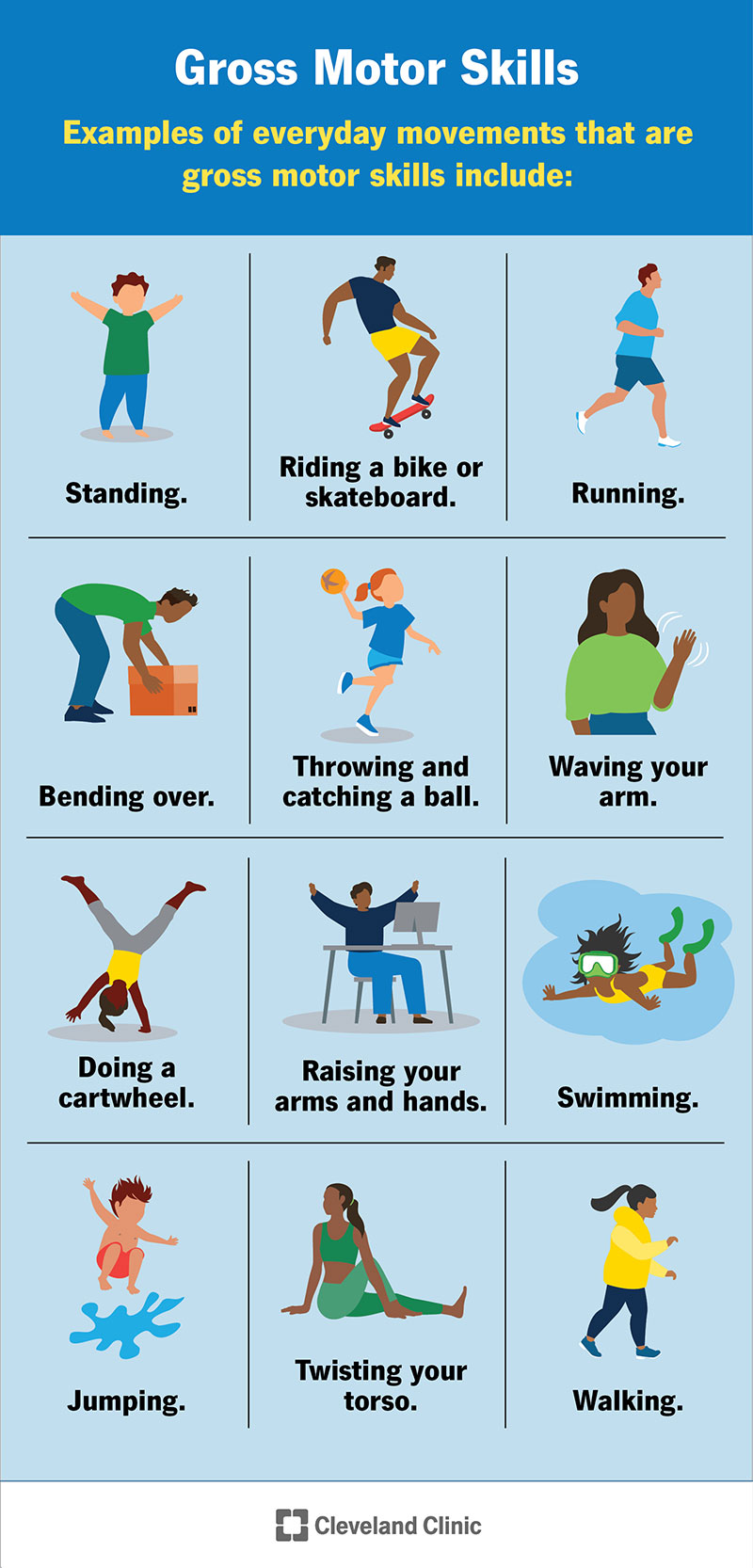
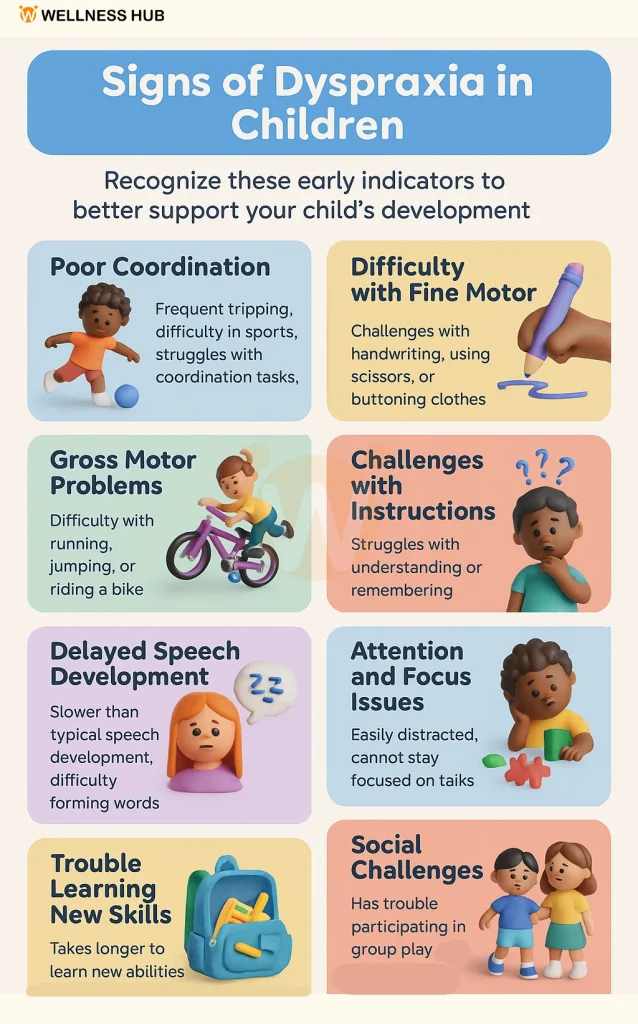
Gross motor skills involve the large muscles of the body that enable core stability, balance, and coordinated movement. Some children experience developmental coordination challenges that affect their physical confidence and participation in daily school activities. In PE lessons and playground games, this may present as difficulties with foundational balance skills like jumping, hopping, or skipping, as well as trouble throwing, catching, or kicking a ball.
Children with these difficulties often struggle with spatial awareness, changing direction quickly, and sequencing complex movements required for dance and gymnastics. Physically, they may present with a slouched posture, appear clumsy, or seem restless and fidgety at their desks due to weak core muscles. Children may become reluctant to join in PE, avoid difficult tasks, struggle in team games, and experience low confidence.
Identifying these signs early allows us to provide targeted, supportive interventions to help every child build strength, coordination, and confidence.
Tier 1: Ordinary and available provision
- Daily playground opportunities for running, jumping, and skipping
- Throwing, catching, and kicking playground games (use of playground games monitors).
- Visual prompts and step-by-step adult modelling of physical movements in PE lessons.
- Peer buddies to support and encourage participation in PE.
- Supportive seating position to help with restlessness.
- Sensory movement cards
Tier 2: Targeted Interventions
- Sensory circuits twice a day
- Targeted obstacle courses to improve balance and spatial awareness.
- Adaptations in PE: such as larger, softer balls; adaptation of space; batting tees; larger rackets; peer support.
- Use of wobble cushions to improve core balance and strength.
- Structured swimming sessions focusing on coordination.
Tier 3: Specific Individual Interventions
- Personalised sensory breaks tailored to an individual child's needs.
- One-to-one adult support during PE.
- Break down physical sequences step-by-step.
- Specialist workstation seating adjustments to support slouched posture.
- OT support if available from Barnet Local Authority
Practical Tools and Resources
- Balance boards
- Wobble cushions
- Resistance Bands
- Access to PE resources
Signposting and Support for parents
-
Dyspraxia Foundation – https://dyspraxiafoundation.org.uk/ •
-
The Sensory Projects – https://thesensoryprojects.co.uk/ •
-
Royal College of Occupational Therapists – https://www.rcot.co.uk/ •
-
Youth Sport Trust – https://www.youthsporttrust.org/
-
https://www.barnetlocaloffer.org.uk/senco_zone/documents/2106-motor-skills-toolkit
Specific Learning Difficulties
Specific Learning Difficulties (SpLD)—such as dyslexia, dyspraxia, or dyscalculia—often create a frustrating gap between a child’s verbal ability and their written output. In the classroom, this can appear as a lack of reading fluency, gaps in phonics, or a total exhaustion and lack of stamina when facing a writing task. Learning about text, tenses, spelling, and organisation feels overwhelming, children may lose confidence, show a lack of enthusiasm, or display disruptive, fidgety behaviours to mask their embarrassment.
SpLD also impacts working memory and processing speed, making it difficult for pupils to plan work, follow multi-step instructions, or automate basic skills like handwriting, spelling and punctuation. Our goal is to spot these signs early, remove the barriers to literacy, and rebuild every child's confidence so their true potential can shine through.
Tier 1: Ordinary and available provision
- Daily 1:1, peer, or group reading; pre-teaching reading texts; access to the Little Wandle book scheme.
- Literacy scaffolds, word banks, and subject-specific Brookland 3 key word vocabulary focus.
- Brookland Golden sentence practice, shared/guided writing, and teacher-modelled editing/conferencing.
- In-task checklists and planning frames
- Early work/warm-up activities and linking spelling practice directly to handwriting.
- Reading lists available for parents in reading logs and for additional guidance on how to support reading at home, please contact Miss Davies.
Tier 2: Targeted Interventions
- Target-driven phonics groups (English as and Additional Language and early readers), Little Wandle programme catch-up, Spelling Shed, and pre-teaching spelling lists or adapted spelling lists for homework.
- Teaching mnemonics to master tricky words and spelling patterns.
- Targeted Project X literacy interventions
- Pre-Teach Big Writing interventions
- Editing Big Write interventions
Tier 3: Specific Individual Interventions
- Laptops for extended writing and Read&Write/IT scanning pens for decoding independence.
- Dictate-to-write (speech-to-text) tools on iPads or adult scribing.
- Daily "little and often" precision teaching focusing on specific, isolated literacy gaps
Signposting and support
-
https://www.edshed.com/en-gb/ - phonics games (pupils have individual log ins)
Speech and Language Needs
Speech, Language, and Communication Needs (SLCN) can frequently be masked by a child's outward behaviour or mistaken for general underachievement. When pupils struggle to process verbal instructions or find the right words to express their thoughts, they may become quiet, withdraw from social circles, or experience intense anxiety when faced with answering a question in class. Frustration with communicating can also result in sudden emotional outbursts or disruptive actions. These presentation signs mirror other developmental profiles, SLCN is sometimes misdiagnosed as Autism Spectrum Disorder (ASD), or it may co-exist alongside it. Our goal is to identify the underlying communication barriers early, and build a supportive environment where every child feels secure enough to share their learning.
Ordinarily Available Provision
- Sentence stems, vocabulary banks, and story mapping .
- Explicitly teacher modelling, demonstrating key language, facial expressions, and positive body language.
- Rehearsing conversations, using non-verbal communication, and using structured talk partners.
- Adapting tasks with visuals to reduce cognitive load and allowing alternative ways to record work
Targeted Interventions
- Intervention groups for social skills
- Using the Looking and Thinking book framework and the Barnet SLT (Speech and Language Therapy) toolkit.
- Targeting small-group phonics and pre-teaching upcoming vocabulary or lesson concepts.
Specific Individual Interventions
- Small-group interventions run or resourced by a Speech and Language Therapy (SLT) trained Teaching Assistant.
- Using Widgit symbols to create highly visual schedules, communication boards, or tasks.
- Creating personalised Social Stories and individualized in-task checklists to guide the pupil through specific routines.
Signposting and support
Children's Integrated Therapies (CIT) Team
020 3316 8900
Barnet Local Offer https://www.barnetlocaloffer.org.uk
Copy and paster the links below for more information
-
Language Plan Level 1 (includes training links and targets)
https://www.barnetlocaloffer.org.uk/senco_zone/documents/2244-language-plan-level-1-pdf -
Language Plan Level 2
https://www.barnetlocaloffer.org.uk/senco_zone/documents/2245-language-plan-level-2-pdf -
Language Plan Level 3
https://www.barnetlocaloffer.org.uk/senco_zone/documents/2246-language-plan-level-3-pdf -
Language Plan Level 4
https://www.barnetlocaloffer.org.uk/senco_zone/documents/2247-language-plan-level-4-pdf - Strategies for different areas of communication and language difficulty
https://www.barnetlocaloffer.org.uk/pages/senco-zone/resources-for-the-language-and-communications-interactive-resource
IAT Training (inclusion advisory team): Training for language groups and referrals for individual children.
Social, Emotional and Mental Health (SEMH)
When a child is overwhelmed by anxiety, trauma, or unstable life events, they are biologically unable to access their learning brain. Instead, they enter a state of survival—fight, flight, or fawn—where the brain prioritises survival over schoolwork. By understanding the root causes behind these behaviours, we can move away from viewing a child as disruptive and instead recognise that all behaviour is communication. At Brookland Junior school, our staff have undergone trauma-informed trauma training and follow a behaviour and relationships policy. See also our Wellbeing page for more information and support.
Tier 1: Ordinarily Available Provision
- Soft starts, regular routines, consistent responses, and early work.
- Morning greetings with trusted adult, regular check-ins.
- Interactive lessons, positive behaviour strategies, and class mindfulness activities.
- Whole-class Zones of Regulation, open safe spaces, and general lunchtime clubs.
- School-wide family engagement, parent workshops, and coffee mornings.
- sensory breaks, and fidget tools.
Tier 2: Targeted Interventions
- Regular mentoring and daily check-ins.
- Social skills, nurture groups, academic interventions, and invited lunchtime clubs.
- TA lesson support, bespoke settling in routines, and managed lunchtime assistance and lunchtime clubs.
- Reward charts
- SEMH-focused trips.
- Focused family engagement, targeted parent workshops, and Ms. Lake attendance support.
Tier 3: Specific Individual Interventions
- Professional child/family counselling, therapy, and intensive ELSA support.
- Direct regulation work (anxiety, stress, anger) with trusted adult.
- Low-arousal sensory room and sensory room
- 1:1 academic interventions and individual home-link communication journals.
Signposting and support
-
NHS Advice for Parents who have children with mental health needs: https://www.nhs.uk/mental-health/children-and-young-adults/advice-for-parents/
-
Young Minds Professional resources and advice: https://www.youngminds.org.uk/professional/schools/
-
NSPCC guides to supporting children with anxiety, self harm and depression: https://www.nspcc.org.uk/keeping-children-safe/childrens-mental-health/
-
Anna Freud Mental Health resources and advice:
Supporting your child is a team effort. We work best when home and school align. You know your child best, and we are here to support you every step of the way.
Our wellbeing lead, Simon Greenhouse, is able to offer further support and advice. We also organise regular parental workshops and talks for parents, running alongside our student mentoring and counselling provision.
Please do not wait for a small worry to become a severe problem. Early intervention allows us to put simple, effective strategies in place before challenges escalate. If you have any further concerns please contact
- Simon Greenhouse, Wellbeing Lead simon@brooklandjnr.barnetmail. net
- Danielle Lucas SENCO
senco@brooklandjnr.barnetmail.net
If you have any enquiries regarding our SEND department please contact SENCO, Danielle Lucas at senco@brooklandjnr.barnetmail.net or tel: 02083466937 ext:2